Inside the Book
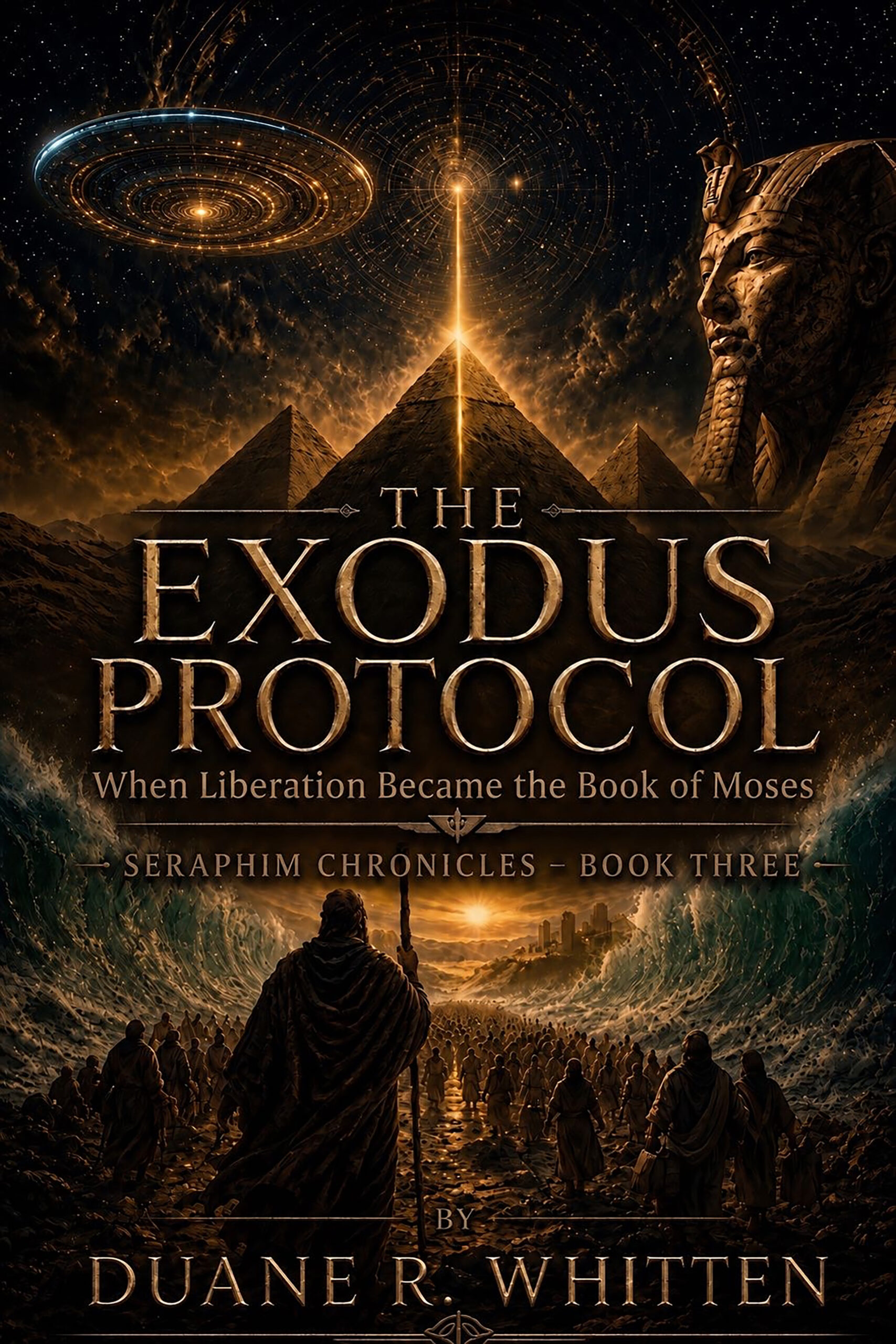
When Liberation Became the Book of Moses
The Moses, plagues, Red Sea, Sinai, and covenant book. The strongest story elements are oppression in Egypt, Moses as reluctant liberator, technology remembered as judgment, the moral cost of intervention, and the shift from escape to becoming a people.
The Exodus Protocol begins in an Egypt where order has become oppression. The monuments that once helped stabilize a civilization now stand inside a system of forced labor, fear, priesthood, decree, and imperial control. The Seraphim have watched knowledge become power, and power become slavery. This time, restraint may not be enough.
Moses enters the story as a man divided between worlds: Hebrew by birth, shaped by the Egyptian court, scarred by exile, and burdened by a calling he did not seek. When Gavri reaches him through the event later remembered as the burning bush, Moses is given not easy certainty, but a dangerous responsibility. He must stand before Pharaoh as the visible center of an intervention he did not design and cannot fully control.
The book follows the pressure of liberation: signs remembered as plagues, a people forced to move before the empire changes its mind, the impossible passage through the sea, and the harder truth that freedom does not end when the chains break. After escape comes formation. Sinai, law, memory, and the Ark matter because liberation without structure can collapse into fear, hunger, and chaos.